The CARES Act provided $150 billion in Coronavirus Relief Fund (CRF) spending to state, local, and Tribal governments and gave the Department of the Treasury (Treasury) Office of Inspector General (OIG) oversight of the program. Treasury OIG reviewed the spending data reported quarterly by the 864 prime recipients and approximately 87,000 subrecipients to identify high-risk entities for further review.
Our Solutions
Given the large number of prime recipients and their subrecipients, data analytics and robotic process automation (RPA) approaches were required to streamline manual processes and prioritize the risks associated with prime and subrecipients.
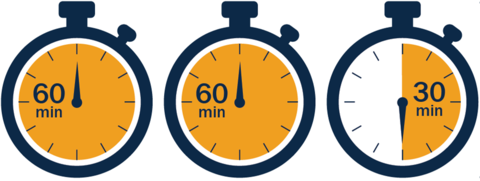
Solution One: We developed an automated process for reviewing grantees' reports that reduced the time it took auditors to review a report by 50%. This process also reduced the manual review of one portion of a report from 2-1/2 hours to 4 minutes.
Solution Two: We created a risk scoring model accessible in a dashboard that helped OIG staff identify and prioritize the highest-risk prime and subrecipients.
Why it Matters
The risk scoring model enabled Treasury OIG's limited staff to focus on the highest-risk recipients for further review, resulting in the staff identifying $2.2 billion in questioned costs.