The Federal Communications Commission Office of Inspector General (FCC OIG) requested our assistance to help identify fraud risk indicators and potential improper payments associated with entities and individuals who participated in FCC’s three pandemic relief programs. In developing the risk model, FCC OIG asked our team to answer the following questions.
Emergency Connectivity Fund (ECF) ($5.25 Billion) – Supported remote learning
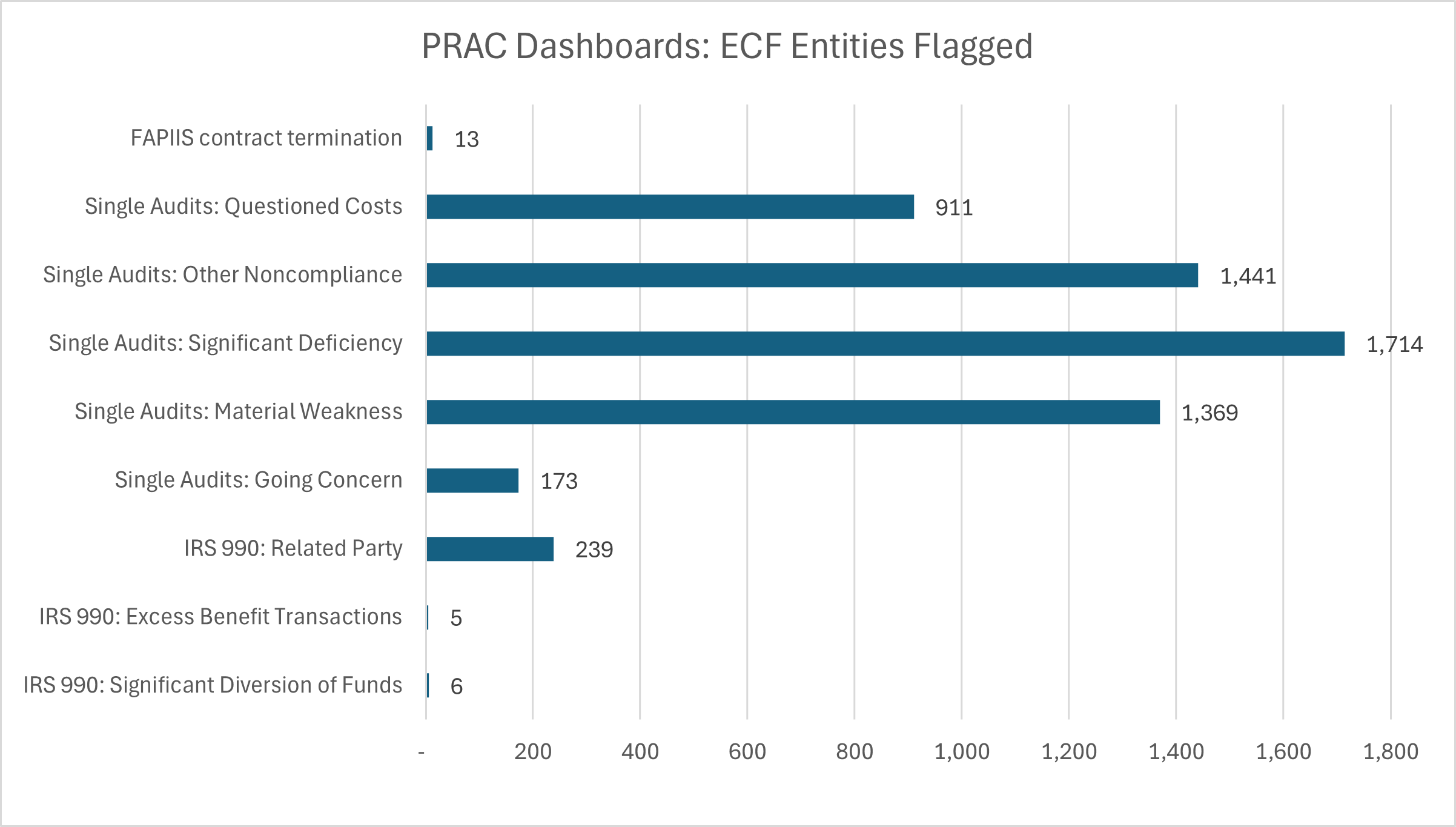
Did any of the ECF recipients (schools, libraries, or vendors) have a history of internal control deficiencies or other signs in their
single audit reports
Entities that have $1 million in federal spending in a fiscal year are required to file a single audit report.
suggesting poor financial management?
Emergency Broadband Benefit (EBB) ($3.2 Billion) – Provided broadband subsidies to low-income households
Did any of the broadband service providers have indicators of potential fraud risk? And did any of the 9.7 million broadband subscribers use stolen or suspicious identities in their applications or potentially misrepresent their incomes to qualify for the program?
COVID-19 Telehealth (TH) Program ($450 Million) – Supported remote health care
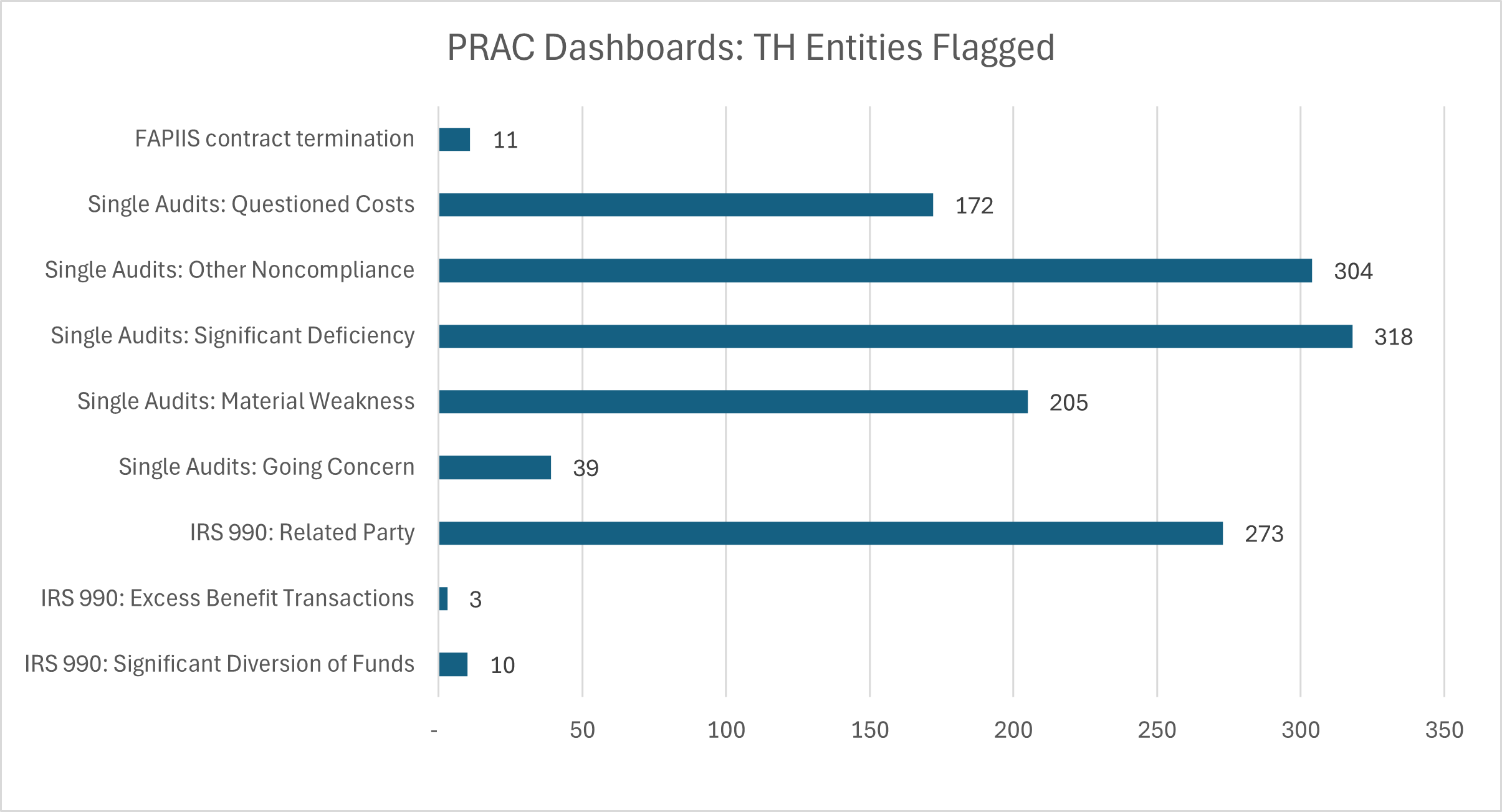
Did any health care providers offering telehealth services have a history of findings in their
single audit reports
Entities that have $1 million in federal spending in a fiscal year are required to file a single audit report.
, such as material weakness or questioned costs? And did any providers disclose risk indicators in their non-profit tax returns, such as diversion of funds?
What We Did
In collaboration with FCC OIG, we developed two risk model dashboards—one for the ECF and TH programs, and one for the EBB. We identified 53 risk indicators and matched entities and individuals from the three programs against 17 data sources, including public, private, and commercial data sources. Of the approximately 14,000 entities and individuals we looked at, we found that 61% were associated with at least one risk flag.
Further, recognizing that fraudsters do not limit their fraud to individual agencies or programs, we worked with FCC OIG to identify entities receiving funding from the three pandemic relief programs who also participated in and received funding from other FCC programs. We found significant overlaps that in themselves don’t necessarily indicate fraud, but which might merit FCC OIG follow up:
55% of entities receiving EBB funding also received funding from other FCC programs.
80% of entities receiving ECF funding also received other FCC funding.
39% of entities receiving TH funding also received other FCC funding.
Why it Matters
The two interactive dashboards allow OIG users to:
Quickly identify high-risk entities and focus on those first.
Export the data for further analysis and/or cross-validate with other agency or program data sources.
Support audits, generation of leads, or ongoing investigations/casework.
Easily access analytic insights and underlying data in centralized dashboards.